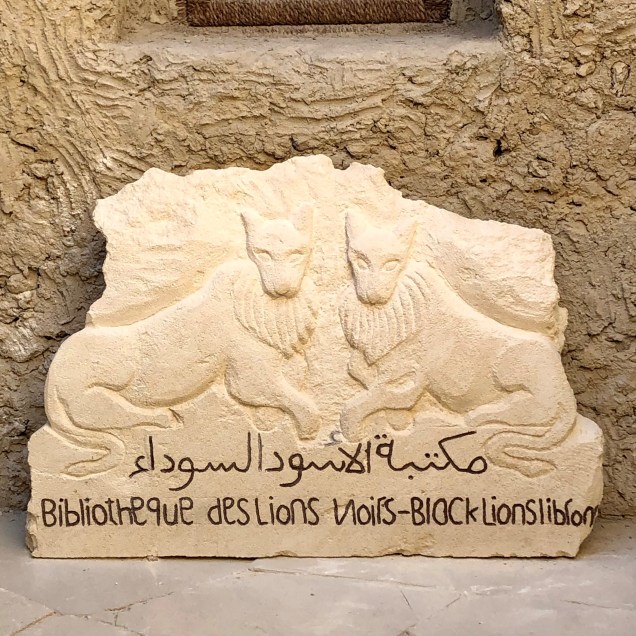
This charming stone sign for the Black Lions Library is actually located inside the library compound, and is not visible from the street.
We’ve been spending time in the Black Lions Library over the past couple of weeks. It’s a real treasure: a quiet, relaxing little library, with a good collection of books about Siwa Oasis in various languages. You can also find books on other Egyptian topics: history, archaeology and the geography of this vast and varied country.
The Shali mountain, viewed from the minaret of the new mosque currently under construction within the old city of Shali.
You can’t miss the Shali. As soon as you arrive in Siwa Town, you see it looming at the center of everything – a small mountain surrounded by an ancient city of mud houses melting together. It looks like it’s caught somewhere between a fairy tale and a futuristic sci-fi movie.
When you read guidebooks or travel websites describing activities around Siwa Oasis, it’s easy to overlook that this area is largely agricultural. Most Siwa residents spend their days caring for crops – olive trees, date palms, vegetables, guava, nehbak and pomegranate trees, a bit of emmer wheat and forage crops for the animals. People here also keep domestic animals for their meat, milk or labor – sheep, goats, chickens, turkeys, rabbits, pigeons, cows, donkeys and horses – and the animals, too, require care.
Dramatic shapes in the fossil-rich hills at the north edge of Siwa Oasis
On the way out to Taghagheen Island to watch the sunset with our friends Amal and Ahmed one evening, Alan noticed that there were tombs and interesting formations along the line of hills at the north edge of Siwa Oasis. “It’s not really all that far from town,” he said to me. “We could bike out here and hike around these hills.”
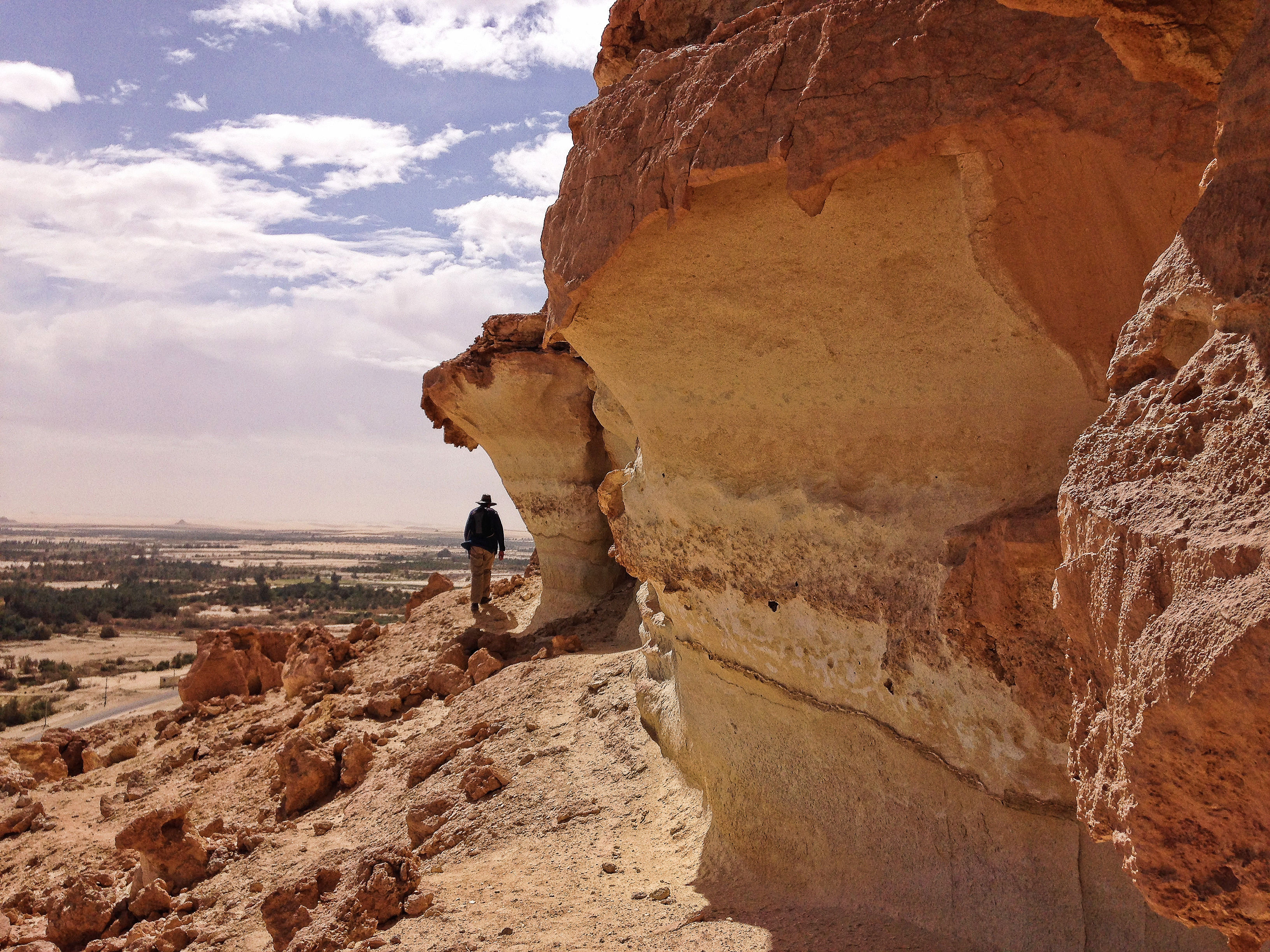
Fascinating geology and great views at Gebel el Dakrur.
We’re enjoying how easy it is to explore Siwa Oasis on foot. You can walk to many fascinating landmarks, monuments and springs around the oasis, including Gebel el Dakrur, a collection of peaks that stands out in the desert landscape.
Hijab, niqab, burqa: The issue of women’s bodies, and how much it’s okay to show – or not – resonates with almost everyone I know, no matter what their religion, nationality or gender.
As for me, I have always felt it’s important to respect every woman’s choice, even if I’m not sure just how much choice she actually has. And personally, I have never wanted to show much skin, even growing up in sunny beach-culture Southern California.
The one thing I have always cared about is connecting with other people. That happens with a smile, a greeting, and especially with the meeting of the eyes.
Traditional pigeon houses with their own distinctive Siwan design.
Today, our third full day in Siwa Oasis, we decided to take it easy and walk a short loop through date groves to the temple of the oracle, located in Aghurmi village, then on to Cleopatra’s Pool and back to town. It is indeed a short loop – just 7 kilometers – but with all the stopping to look at ruins and springs, to take photos and enjoy a cup of tea along the way, we were out walking and looking around for almost five hours.

 When you read guidebooks or travel websites describing activities around Siwa Oasis, it’s easy to overlook that this area is largely agricultural. Most Siwa residents spend their days caring for crops – olive trees, date palms, vegetables, guava, nehbak and pomegranate trees, a bit of emmer wheat and forage crops for the animals. People here also keep domestic animals for their meat, milk or labor – sheep, goats, chickens, turkeys, rabbits, pigeons, cows, donkeys and horses – and the animals, too, require care.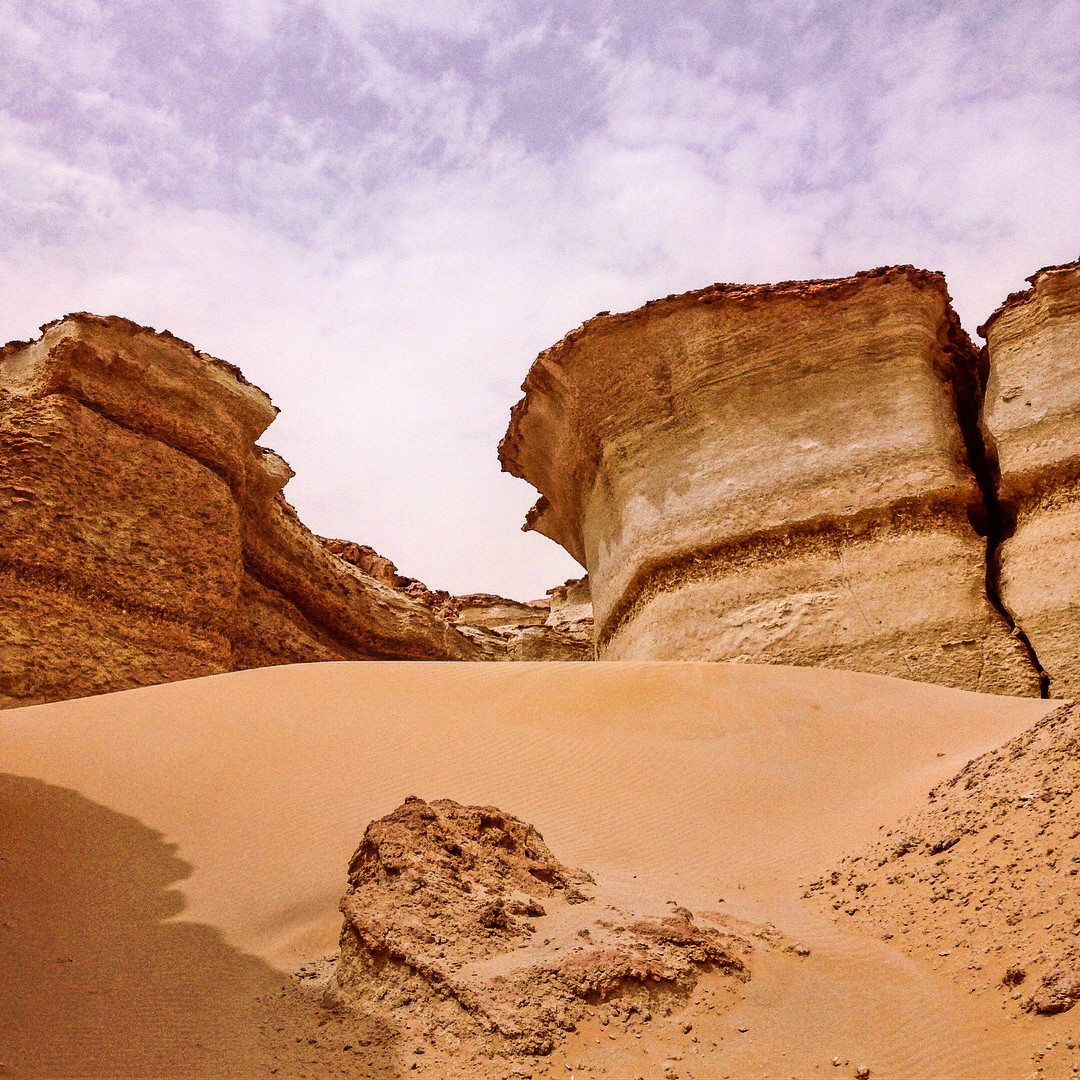


 Rambulatory