
We’ve spent nearly a week in Almora, more time than I might have imagined we’d want to spend in a town of perhaps 36,000 people whose most famous monuments are mostly outside the town.
We’ve spent nearly a week in Almora, more time than I might have imagined we’d want to spend in a town of perhaps 36,000 people whose most famous monuments are mostly outside the town.
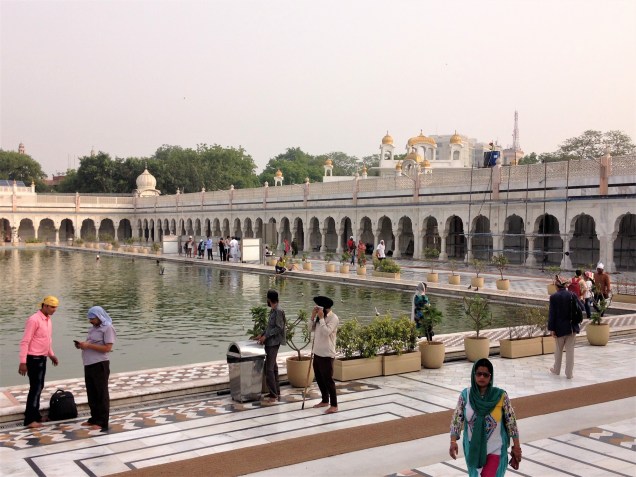
We wake up early, which is fortunate during the hot season. It’s been about 41° C here at the hottest time of day since I arrived two days ago, and humidity is high – nearly 50 percent. So getting out early for a walk is a good idea. Even at 6:00 AM, which is when we set out today, I was mopping myself with a handkerchief by the time we stopped for tea.
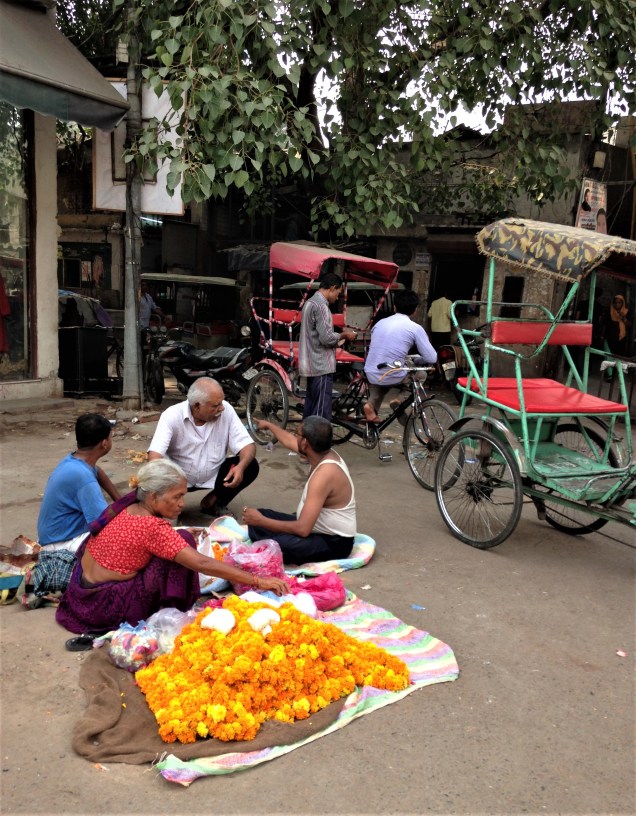
I flew into Delhi two weeks after Alan, diverted by a family wedding. As usual, we elected to stay in Pahar Ganj, located just opposite the New Delhi railway station and beside a major stop on the Delhi metro system. This means you can get on the metro at the airport and reach Pahar Ganj in 30 to 40 minutes, which is a lot faster than going by taxi during daytime hours. (Delhi traffic is legend.)
Pahar Ganj was where I settled shortly after I arrived for the first time in India in 1980. I stayed there for six weeks, just getting used to being in India. I was in Pahar Ganj again for a couple of days in 2009; it was my first visit back to India since Alan and I left together in 1982.
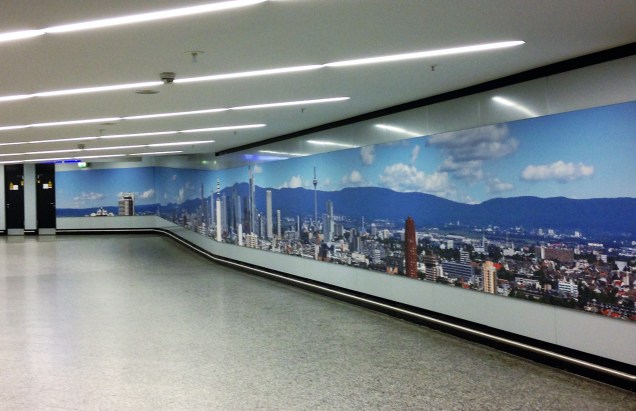
I’ve been through Frankfurt Airport a number of times, yet its size and layout never fail to confuse me. Apparently this place confuses even its employees.
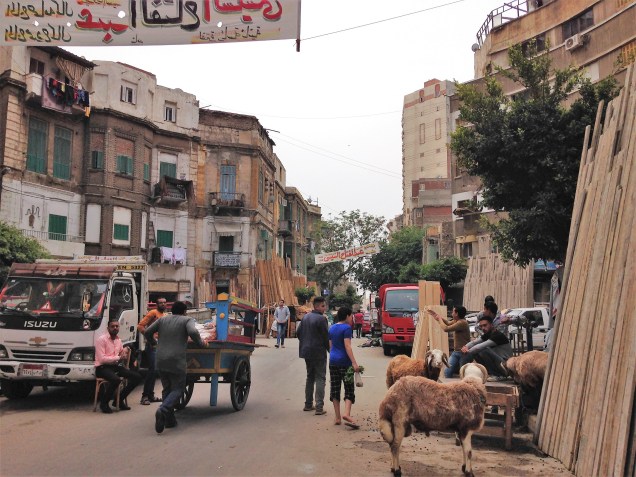 Alexandria is an interesting city, full of history from ancient times and forward. A lot of what we want to see is very walkable – an hour or less from our hotel. Today we walked through a series of interesting neighborhoods to the catacombs of Kom al Shoqafa, a tomb complex dug deep into the ground – so deep that the bottom level is now underwater.
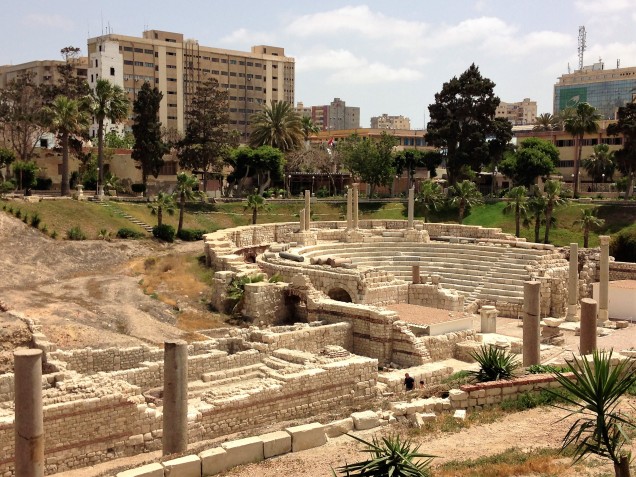
Today was our last full day in Alexandria, and there was one more place we really wanted to visit: the Roman amphitheater. Luckily for us, it’s just a short walk from our hotel – not much more than a kilometer – so we set off after breakfast to buy our train tickets back to Cairo and see the amphitheater.
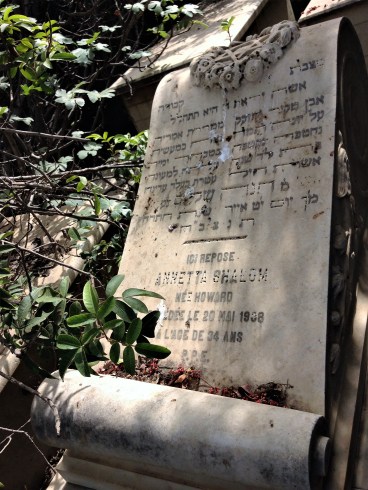
Whenever we get to a new place, Alan likes to pore over whatever maps he can find, looking for interesting locations that may not be written up in our guidebook. When you scan tourist maps of Alexandria, you can see the city offers a number of interesting places, including the old Jewish cemetery near Alexandria University’s Faculty of Pharmacy.
So after a visit to the Alexandria National Museum (great place, by the way), we walked toward the Jewish cemetery. As we got close to where it seemed to be on the map, we looked around, expecting to spot a large open space dotted with tombstones, just like other cemetery grounds in Egypt. No such sight appeared, so we walked slowly around the edge of a high wall overhung with tree limbs, looking across a small roundabout to the pharmacy school, where we could see lots of young people hanging out and chatting.
One of the great pleasures Alexandria has to offer is a morning walk on the Corniche. You can wander up and down, people-watching to your heart’s content, despite the constant flow of noisy traffic on the six-lane highway separating the seaside walkway from the rest of Alexandria.
You almost always see people fishing with incredibly long poles (I estimate they’re about 15 feet). But this morning we got to see something completely new to us: a large group of men wielding a huge net, and dragging their catch in to shore.
When I first read about the rebuilt Great Library of Alexandria years ago, I wanted to see it. But it never occurred to me that someday I’d be able to casually stroll there after breakfast.
That’s exactly what we did this morning, after enjoying a plate of fuul and some tomato-and-cheese salad at our favorite coffee shop. We walked along the Corniche, enjoying the morning breezes and watching fisherman casting their lines, until the Alexandria Library came into sight.

You can’t miss the Shali. As soon as you arrive in Siwa Town, you see it looming at the center of everything – a small mountain surrounded by an ancient city of mud houses melting together. It looks like it’s caught somewhere between a fairy tale and a futuristic sci-fi movie.
 Rambulatory